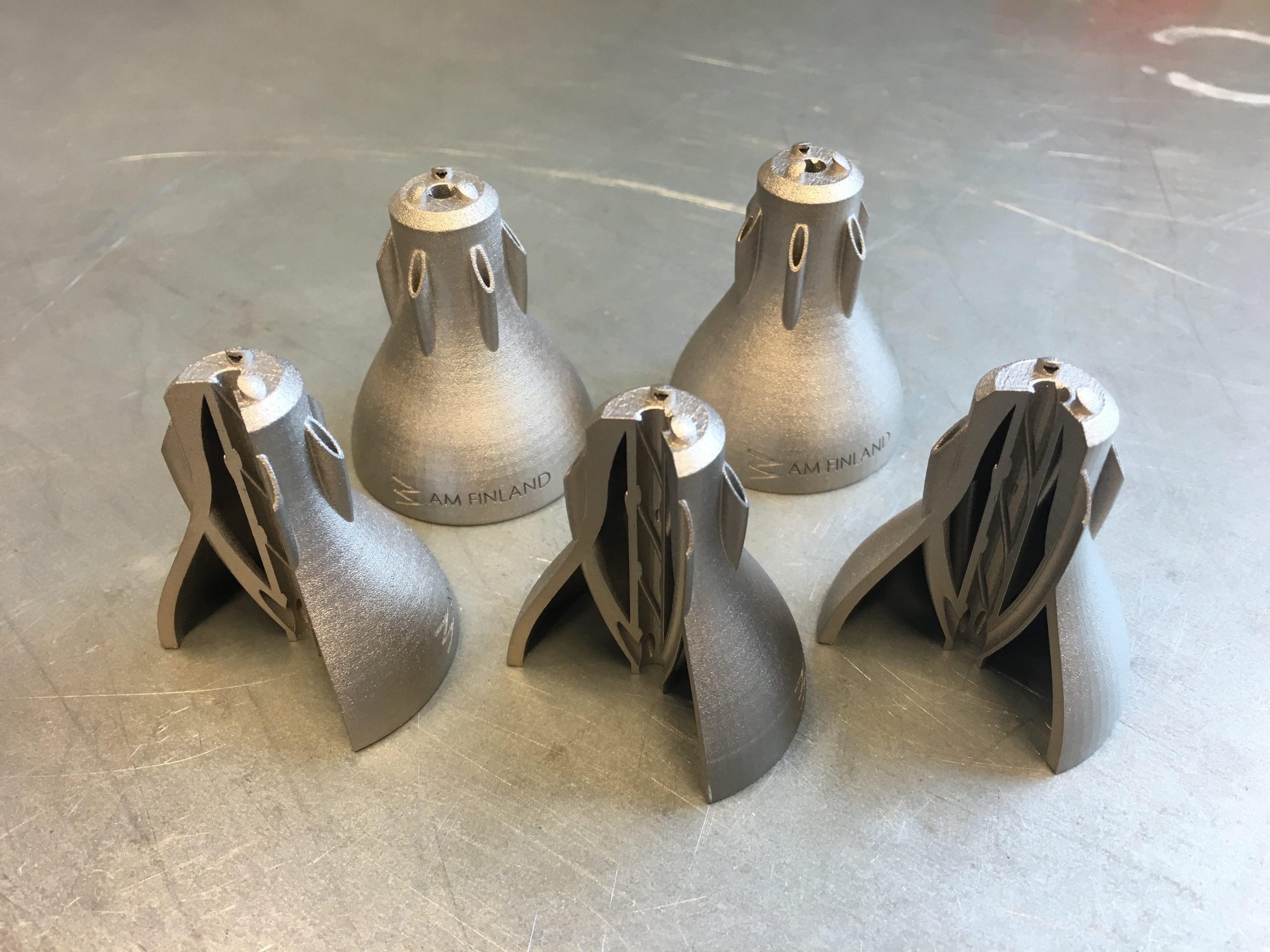





How to manufacture complex metal parts without expensive tooling?
Traditional manufacturing often forces a compromise between design ambition and financial reality. When a component requires intricate internal geometries or optimized weight-to-strength ratios, the conversation usually shifts to expensive molds, complex jigs, and specialized tooling. These upfront investments create a significant barrier, particularly for small-to-medium production runs where the cost of tooling cannot be easily amortized. Modern additive manufacturing removes these physical constraints. By utilizing high-precision metal additive manufacturing, industrial components are grown layer-by-layer directly from digital files, bypassing the need for physical molds entirely. This shift allows engineers to focus on part performance rather than the limitations of the machine shop.
Geometric Complexity and the Principle of Design Freedom
In conventional subtractive manufacturing, every hole, curve, and cavity must be reachable by a cutting tool. In casting, the part must be designed so it can be removed from a mold. Additive processes, specifically metal 3D printing using Selective Laser Melting (SLM), operate without these geometric handcuffs. Because the part is built from a bed of fine metal powder fused by a high-power laser, it is possible to create internal cooling channels, organic lattice structures, and consolidated assemblies that would be impossible to machine.
By placing material only where structural loads require it, engineers can reduce part weight by up to 60% without sacrificing strength. This is critical for fuel efficiency in aviation and ergonomic handling in industrial tools.
Complex assemblies originally consisting of twenty individual bolted or welded components can often be redesigned as a single additive part. This eliminates assembly labor and removes potential failure points like leaky joints or loose fasteners.
Industrial Material Integrity in Serial Production
A common misconception is that additive manufacturing is limited to fragile prototypes. In an industrial context, the focus has shifted toward serial production using certified alloys. Materials such as stainless steel (316L) and aluminum (AlSi10Mg) are routinely processed to achieve mechanical properties comparable to—and in some cases superior to—traditional cast parts.
Technical Material Profile: Stainless Steel 316L
Note: According to industry standard testing, these values ensure the part performs reliably in corrosive environments or high-pressure applications.
The ability to manufacture using these high-performance alloys without the need for tooling means that technical updates can be implemented instantly. If a field test suggests a design improvement, the digital file is updated, and the next production batch incorporates the change immediately. This level of agility is the primary driver behind the transition from traditional manufacturing to additive methods for functional end-use parts.
Eliminating the Financial Barrier of Fixed Tooling
In traditional manufacturing, the “unit cost” is often a deceptive figure. While high-volume injection molding or die casting offers low per-part prices, the initial investment in molds can reach tens of thousands of euros. This creates a “lock-in” effect where design iterations become prohibitively expensive once the tools are cut. Additive manufacturing fundamentally changes this economic equation by decoupling the complexity of a part from its production cost.
Economic Advantages of Tool-less Manufacturing
For industrial equipment manufacturers, this means that capital is no longer tied up in heavy metal molds sitting on shelves. Instead, that capital can be diverted into R&D and product optimization. When 3d metal printing is integrated into the production strategy, the break-even point for small-to-medium series shifts in favor of the manufacturer, allowing for profitable customization and specialized components that were previously financially unviable.
Digital Inventory and the Shift to On-Demand Production
One of the most significant logistical benefits of additive manufacturing is the transition from physical warehousing to digital inventory. According to industry logistics experts, the cost of maintaining physical spare parts can account for up to 20% of a company’s inventory value annually. By utilizing Selective Laser Melting (SLM), components can be produced “just-in-time” from a digital CAD file.
Legacy parts without original CAD data can be 3D scanned and reverse-engineered into a digital format, preserving the ability to manufacture obsolete parts indefinitely.
Instead of shipping heavy metal parts across oceans, digital files are sent to local production hubs, significantly reducing the carbon footprint and lead times associated with global logistics.
This on-demand capability ensures that production lines remain operational with minimal downtime. When a critical metal component fails, the ability to manufacture a high-strength replacement within days, rather than waiting weeks for a cast part to arrive from an overseas supplier, provides a decisive competitive advantage in industrial maintenance and repair.
The transition to additive manufacturing is not merely a change in machinery; it is a fundamental redesign of how industrial value is created. By removing the constraints of tooling, companies are finally free to design for function, performance, and sustainability. As the technology continues to mature, the question for industrial leaders is no longer whether additive manufacturing is viable, but how quickly it can be integrated into the core production cycle to replace obsolete, waste-heavy methods.
Ready to optimize your production?
Contact Materflow’s experts today to see how industrial additive manufacturing can transform your supply chain and eliminate expensive tooling costs.